CLASS 01
(AUS) Antweight
150 g plastic robots
PlasticOpen materialDestructive & Non-destructive brackets (Plastic division only)
The featherweight entry point — cheap, quick to build and the perfect first robot.
Choose 150gNorth Queensland's combat robotics club. Plastic-class fighting robots, beginner-friendly divisions, and real arena battles — no experience needed to get started.
The robots are coming!
The Sport
Combat robotics is exactly what it sounds like — builders design and drive small armoured robots that fight head-to-head in a sealed arena. Think the spirit of televised robot combat, scaled down to classes you can actually build on a kitchen table and a hobby budget.
Townsville Robot Combat runs plastic-class divisions built to be cheap, safe and welcoming for first-timers — while still delivering proper arena carnage. Whether you're a student, a maker, an FPV pilot or someone who just wants to smash something for sport, there's a class for you.
Never built a bot? Perfect. Our Get Started guides walk you from zero to your first robot, and the club is here to help along the way.

Video from TV Show Battle Bots used as example.
Upcoming Events
⚡ Saturday 25 July · 1:30 PM – 4:00 PM · $10 entry
Want to get your combat robot battle-ready? Whether you're mid-build, starting from scratch, or just curious about combat robotics, this Saturday arvo session is for you.
No experience needed, all skill levels welcome. Come build, learn, and hang out with Townsville's combat robot community.
Cost: $10 — pizza around 3pm, included in your entry.
📍 Rising Sun FPV, 22 Castlemaine Street, Kirwan QLD 4817

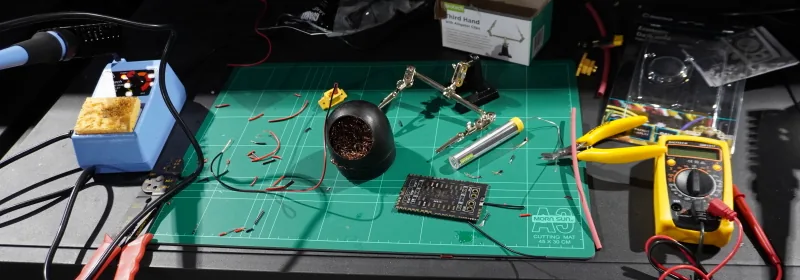
Jaycar has sponsored the Club and provided soldering iron stations and related gear, giving our members the chance to learn these skills at our, on-request, hands-on practical sessions.
This kicked off with our first ever Learn to Solder Session on Thursday afternoon. A great group, and I believe everyone walked away with a more developed skill set and more confidence in soldering.
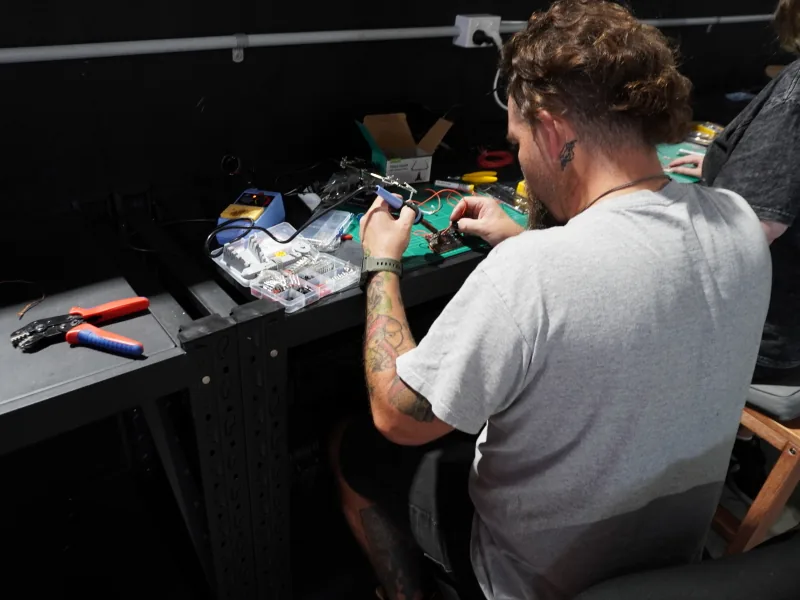
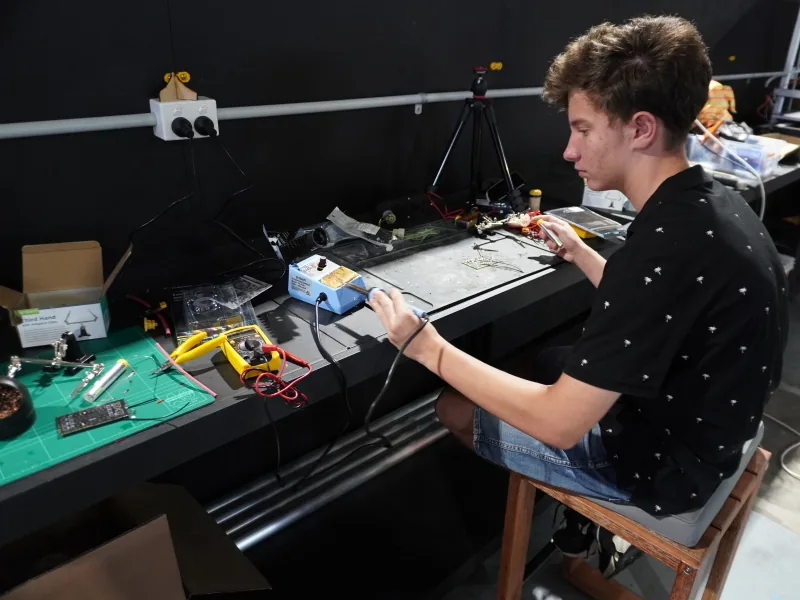
⚡ On-Demand Classes · $25 per person
We run on-demand “Learn to Solder” classes, hosted at Rising Sun FPV — small 4–5 person, 90-minute sessions with all equipment provided (bring your own gear if you'd prefer). It's a true starter class that explains everything from scratch, assuming little to no prior knowledge.
More days and times are being added as requested.
Want to book a space or register interest for future dates? Fill out the Contact Form on this website, or email info [at] tsvrc.com.au with any questions.

These classes are made accessible and affordable by the generous support of Jaycar Electronics, whose kind donation of the soldering stations and other equipment makes every session possible. We're proud to partner with them in bringing hands-on STEM skills to the Townsville community.
⚡ Coming Soon
Date and venue will be announced shortly. Follow our Facebook page to be the first to know when entries open and when the bots roll out.
Weight Divisions
Three divisions, from a 150 g featherweight first build up to the heavier Beetleweight class. Weights follow the international standard so your bot travels.

CLASS 01
150 g plastic robots
The featherweight entry point — cheap, quick to build and the perfect first robot.
Choose 150gCLASS 02
454 g 1 lb · plastic robots
The featherweight mid entry point — cheap, quick to build and the perfect first/second robot.
Choose 454gCLASS 03 Coming Soon
1.36 kg 3 lb · plastic robots
Coming soon — the international 3 lb standard will run once we build a larger arena.
AUS ANTWEIGHT class limits weight to 150g and restricted to approved plastics — PLA, PLA+, ABS, PET, PET-G, acrylic, cardboard or plywood — meaning robots are fabricated almost entirely from plastic parts (aside from electronics, motors, and fasteners). This class is rapidly growing in popularity as an entry level class due to the ease in fabrication and low damage rate which make the robots extremely affordable compared to other weight classes.
This is a great weight class to start in, as robot building methods such as direct driving weapons and wheels can be employed without major modifications and post processing. This weight class is less competitive than the beetleweight combat robot class which makes it ideal for a first robot.
First competition: in its Plastic division it runs two brackets — destructive and non-destructive weapons — so you don’t need to destroy your robot to participate. Control-style robots (pushers, wedges, lifters) can still enter the destructive bracket if they wish. It also runs two material divisions — plastic (built to the PLAstic ruleset) and open material (any material).
US ANTWEIGHT class limits weight to 1lb and restricted to approved plastics — PLA, PLA+, ABS, PET, PET-G, acrylic, cardboard or plywood — meaning robots are fabricated almost entirely from plastic parts (aside from electronics, motors, and fasteners). This class is rapidly growing in popularity as an entry level class due to the ease in fabrication and low damage rate which make the robots extremely affordable compared to other weight classes.
This is a great weight class to start in, as robot building methods such as direct driving weapons and wheels can be employed without major modifications and post processing. This weight class is less competitive than the beetleweight combat robot class which makes it ideal for a first robot.
First competition: in its Plastic division it runs two brackets — destructive and non-destructive weapons — so you don’t need to destroy your robot to participate. Control-style robots (pushers, wedges, lifters) can still enter the destructive bracket if they wish. It also runs two material divisions — plastic (built to the PLAstic ruleset) and open material (any material).
BEETLEWEIGHT class are limited to 3lb or 1.36kg and restricted to approved plastics, meaning robots are fabricated almost entirely from plastic parts (aside from electronics, motors, and fasteners) This is by far the most competitive insect weight class.
Due to the push for light motors in the giant drone market, Brushless motors RPM and torque ratios used on this class robot provides insane power to weight ratios. This makes beetleweight robots incredibly dangerous and destructive. The most successful beetleweight robots feature tons of custom parts and have been through many design iterations to perfect the robot. Because beetleweight robots are so powerful, an important aspect of designs is modularity.
Coming soon: Beetleweight will join once we build a larger arena. It will run two material divisions — plastic (the PLAstic ruleset) and open material (any material).
PLAstic construction ruleset. Every class runs two material divisions — a plastic division and an open-material division. The plastic division (AUS & US Antweight and Beetleweight) must be built from approved plastics (PLA, PLA+, ABS, PET, PET-G, acrylic, cardboard or plywood), with metal limited to fasteners, bearings and bushings and electronics, motors and grippy wheel tread exempt. It keeps bots affordable, safer in the arena and accessible to newcomers. The open-material division has no material restriction. Full details are in the rules PDF on the Compete page.
First competition limits. In their Plastic division, the AUS & US Antweight classes each run destructive and non-destructive weapon brackets — so you don't need to destroy your robot to take part. Control-style robots can still enter the destructive bracket if they wish. Beetleweight is coming soon, pending a larger arena.
Antweight Brackets
The AUS & US Antweight classes each run two brackets, so you can fight the way that suits your robot — and your nerves.
Less about wrecking your opponent, more about putting on a show. These fights are judged largely on the entertainment your robot creates for the crowd and how well you control the arena — driving, positioning, aggression and style. A clever pusher or flipper with no spinning weapon can dominate here. It's the friendliest place to start: you don't need to destroy (or risk destroying) your robot to do well, so it's perfect for a first build and learning to drive.
Exactly what it says on the tin — the goal is to disable your opponent's robot within the time allowed. Spinners, flippers and crushers come out to play, and a clean knockout can end the fight early. It's higher risk and higher reward: more damage to dish out, but also more to repair afterwards.
This is where the Carnage lives.
Mindset & Approach
The design calls you make — and the lessons every loss teaches — matter more than raw power. Keep building and you'll keep getting better.
When you upgrade a body or design a new weapon, the engineering choices you make are often the difference between victory and defeat — where you place the armour, how you mount and balance the weapon, where the weight sits. Sweat these decisions. A well-thought-out robot beats a powerful but poorly-designed one more often than not.
Here's the secret most champions won't tell you: you learn more from a loss than a win. A loss shows you exactly where the robot is weak — the armour that cracked, the weapon that jammed, the mount that sheared off. Take that back to the drawing board and redesign, and you reinforce everything you've learned since your last build. Every champion has a pile of broken first attempts behind them.
New to combat robotics? No experience needed. The Get Started page has build examples, beginner how-to guides, and the parts and links you need to put your first bot together. It'll grow as the club does.
Start BuildingCombat robots are powerful machines. The Safety page covers building safely, charging and storing LiPo batteries, and the event-day checks that keep you and everyone around the arena safe — read it before you power anything up.
Read the Safety guideWant to go deeper? The Knowledge Base covers the fundamentals — designing for modularity, prototyping fast, weight classes and the trade-offs that win matches — plus a growing set of curated educational links and YouTube build guides from the wider combat-robotics community.
Open the Knowledge BaseReady to throw a bot in the arena? Entries open by email and through our Facebook page. Head to the Compete page for the full how-to-enter rundown, what to bring on the day, the safety checks, and the complete club ruleset (PDF).
How to CompeteSponsored by
Providing soldering stations and related equipment for our club.
Proudly Sponsored & Hosted By

Sponsored by

Providing the clear polycarbonate arena walls for the clubs first arena.